
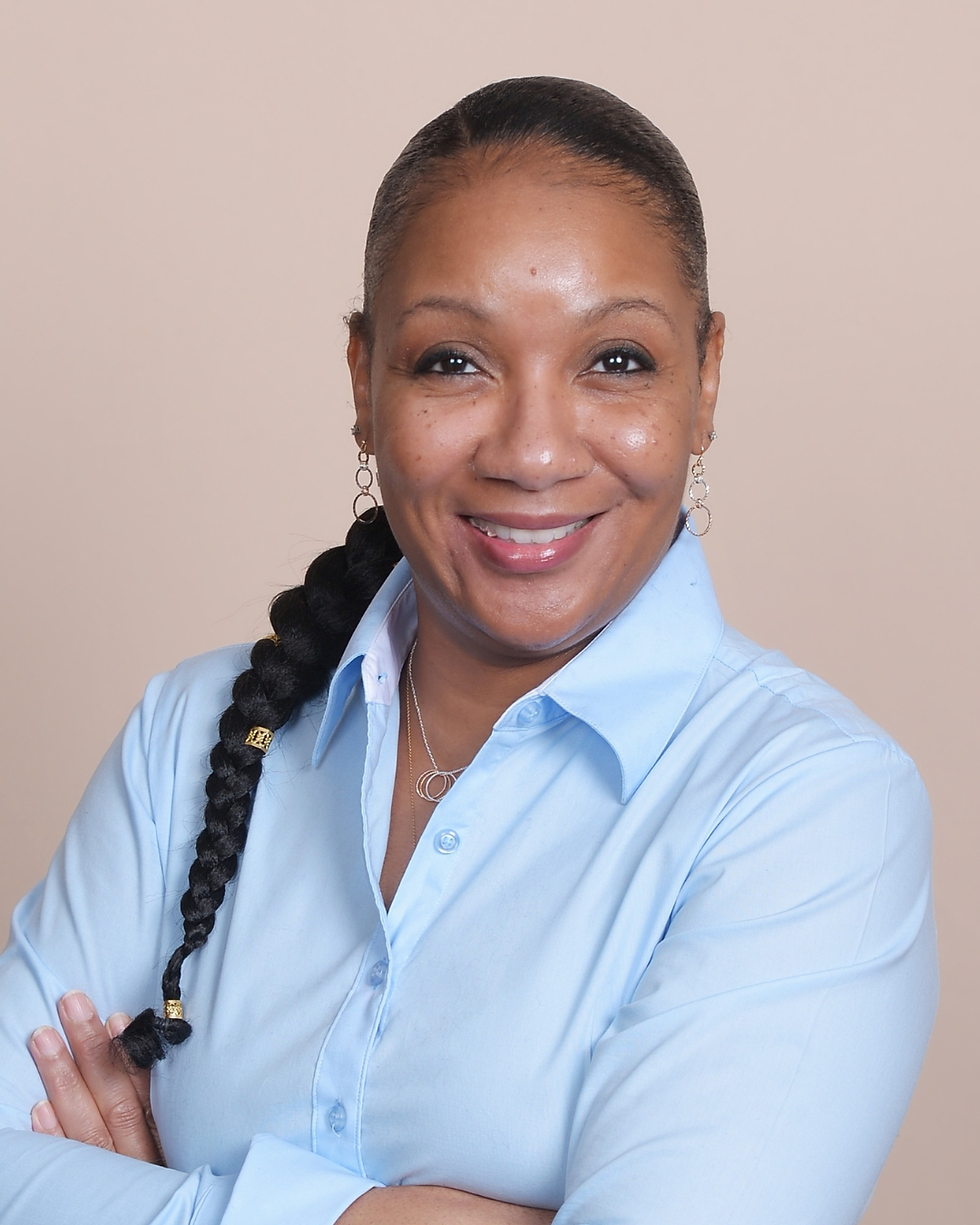
HLM board member profile: Wenora Johnson
For Wenora Johnson, health literacy is personal. It informs her work as a patient advocate, and her efforts to build what she calls a meaningful survivorship as a 3-time cancer survivor.
And while it’s clear that Johnson’s approach to facing health challenges with curiosity and resolve has tenets of health literacy at its core, Johnson describes her initial connection with Health Literacy Media as a matter of chance.
“I happened to come upon the HLM website, and signed up for a newsletter,” said Johnson, who was interested in HLM’s work to get patient feedback on public-facing educational materials about clinical trials.
“I found great pleasure in it,” said Johnson, about reviewing materials such as plain language summaries. “I just found it educational to be able to see from the other side how new treatments were coming into play in patients’ lives.”
HLM staff quickly recognized the clarity and value of Johnson’s insights. She consistently showed up with energy and authentic input, leading eventually to an invitation to serve on HLM’s Board of Directors– an invitation she generously accepted.
Advocacy in action
For Johnson, advocacy is personal too. She describes her experience as an advocate around an interconnected framework that spans from the individual to the institutional, all informed by her own story.
Self-advocacy includes speaking up at the doctor’s office, getting answers to all your questions, and making decisions about healthcare based on accurate and up-to-date information.
“Self-advocacy is important for all of us,” said Johnson. “Every single one of us are going to experience this, for ourselves or for a loved one”.
Then there’s patient advocacy, which Johnson sees as raising awareness through sharing her story. Johnson was diagnosed with Lynch syndrome, a hereditary condition that increases the risk of several types of cancer.
After genetic testing confirmed that she carries an MSH2 mutation, she began to see her health history not only as something she had lived through, but as knowledge she could draw upon to advocate for herself, her family, and other patients.
In policy advocacy, Johnson describes her experience testifying on Capitol Hill to advocate for early detection in colorectal cancer as driven by her “Ph.D.” - her Personal history of Disease.
And in 2021, the recommended age for colorectal cancer screening was lowered from 50 to 45.
“That's my Ph.D., that has kept me on this path of advocacy,” said Johnson. “I love seeing those changes take place. And, you know, I don't take that lightly.”
And then there is research advocacy: helping researchers and study teams understand why the patient voice needs to be part of the process from the beginning. Johnson underscores the responsibility of researchers to ensure that study materials such as informed consents are in plain language, and that prospective participants understand all their options, including not joining a trial.
“I didn't realize how much research advocacy would take up on my plate,” said Johnson. “It's been really good.”
In fact, Johnson enthusiastically shares her experience of joining a clinical trial for Lynch syndrome herself. The knowledge about trials that she’s gained through experience informs the questions that she encourages people who are thinking about joining a trial to ask: “What happens if I have side effects?” “Could I get a placebo?” “Can I leave the trial early?”
For Johnson, clear information can make the difference between uncertainty and confidence.
Meaningful survivorship
As a survivor of colorectal and endometrial cancers and basal cell carcinoma, Johnson says survivorship does not mean returning to life exactly as it was before cancer. She knows it can mean concerns about cancer coming back, financial strain, and insurance problems.
Meaningful survivorship is about what patients can gain and contribute from their experience. Johnson cites her involvement with organizations–including HLM–who educate and advocate in health policy, cancer research, and genetic testing.
“For me, meaningful survivorship is not only about living beyond cancer, but also about using the knowledge gained through that experience to help those who come after me,” says Johnson.
A personal connection
As a Lynch syndrome patient, Johnson knows she has a 50% chance of passing the mutation she has down to her children. She sees sharing genetic information with loved ones who may also be at risk as a responsibility.
“I'm talking to my children about getting tested, the importance of it. And I'm even giving them educational material,” she said. “I’m not trying to be selfish, but for me, it's just real personal. It's personal because it affects my generation of children and grandchildren.
And, she encourages others to learn what their own family history might mean for their health.
A vital role at HLM
As a member of Health Literacy Media’s board, Johnson brings her expertise that is rooted in a deep understanding of what patients need most from health information. Her perspective helps keep the patient voice central to conversations about research, communication, and care.
A lover of quotes, Johnson points to the pastor Charles Swindoll, who said “Life is 10% what happens to you and 90% how you react.” And when it comes to how patients react to health concerns such as a cancer diagnosis, Johnson points to the importance of good information.
“That’s going to actually be a big chunk of that 90%,” said Johnson. “Because if you can't take in the information and understand it, or how it's going to benefit you, or think about other treatment options or whatever it is, then you're kind of lost. Health literacy gives patients the ability to ask questions, understand their choices, and have a voice in what happens next.”
Comments